AI as a Co-Worker: How We're Leveraging Claude Code, Securing Data, and Rethinking the Human-AI Partnership
by Ashley Mozorandi, Senior AI & Web Solutions Architect
1. The Shift From AI Tool to AI Teammate
There's a version of the AI conversation that positions the technology as a vending machine — you put in a prompt, you get out an answer, you move on. That framing is increasingly outdated, and frankly, it undersells what's actually happening on the ground in engineering teams today.

The more accurate mental model is a co-worker. Not a junior one that needs hand-holding, and not a senior one that replaces your judgment — but a collaborative peer that handles specific domains with speed and consistency while you focus on higher-order decisions. Tools like Claude Code have accelerated this shift dramatically. Instead of context-switching between your editor and a chat interface, Claude Code sits natively in the terminal and understands your repository — your file structure, your conventions, your dependencies. It can scaffold a new feature, refactor a legacy function, write tests for untouched code paths, and explain an unfamiliar codebase section, all without you breaking flow.
The teams seeing the most benefit aren't those treating AI as a shortcut. They're the ones building deliberate collaboration patterns — defining what the AI owns, what the human owns, and where the handoff happens.
2. What Claude Code Actually Changes About Daily Development
The productivity conversation around AI tends to stay abstract. It's worth being concrete about what changes when you integrate a tool like Claude Code into a real workflow.
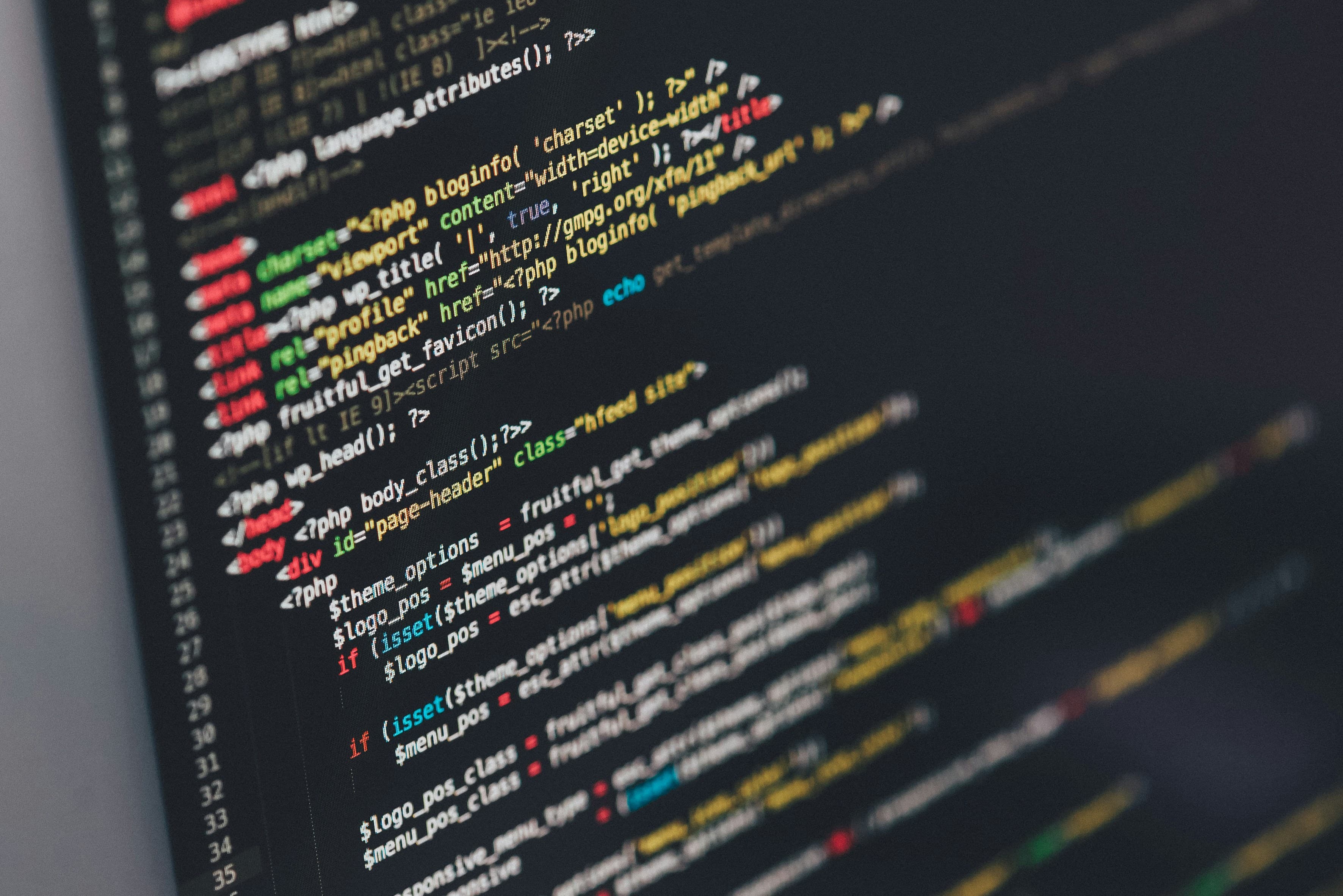
Code review velocity is the most immediate win. Engineers can ask Claude Code to pre-review a pull request before it goes to a human reviewer — catching obvious issues, suggesting edge case handling, and flagging deviations from established patterns. This doesn't replace human review; it raises the floor so human reviewers spend their time on nuanced architectural decisions rather than style nits.
Onboarding compression is a less talked-about but equally valuable gain. A new engineer dropped into a large codebase can query Claude Code conversationally — "What does this service own?", "Why is this abstraction structured this way?", "What's the history of this module?" — and get grounded far faster than reading stale documentation or waiting for a colleague to be free.
Repetitive scaffolding — CRUD endpoints, boilerplate component structures, migration files, test fixtures — moves from time-consuming to near-instant. Engineers report that the psychological relief of not dreading these tasks changes how they approach projects. When the boring parts are handled, creative energy goes further.
The important caveat: Claude Code works best when the engineer stays in the loop. Blindly accepting generated code without understanding it creates technical debt at AI speed. The teams getting the most value are those who use AI output as a strong first draft, not a finished product.
3. Securing Data in an AI-Augmented Workflow
Integrating AI tools into development pipelines introduces a security surface that many teams are still catching up to. The risks are real, and they deserve a direct conversation.

The most common vulnerability isn't dramatic — it's accidental. Engineers paste database schemas, API keys, internal service URLs, or customer data snippets into AI interfaces to get contextual help. Even with enterprise agreements and data retention policies in place, this habit creates exposure that security teams didn't sign off on and often don't know about.
The answer isn't to prohibit AI use. It's to build habits and guardrails that make safe usage the path of least resistance.
Sanitize before you share. Any code snippet shared with an AI tool should be stripped of real credentials, real customer identifiers, and production environment specifics. Anonymized or synthetic data serves the same purpose for getting useful AI output without the risk.
Understand your tool's data policy. Claude Code, run locally via the API, gives teams control over what leaves their environment. Understanding the difference between consumer products and enterprise API usage matters — the data handling guarantees are meaningfully different.
Treat AI-generated code like third-party code. Run it through your standard security scanning pipeline. AI models can suggest patterns that are subtly insecure — particularly around input sanitization, authentication flows, and cryptographic implementations. A generated function that looks correct can still introduce a vulnerability. Your existing SAST tooling should catch these; make sure it's in the path.
Log and audit AI interactions where possible. Teams using AI via API endpoints can log prompts and responses in their own infrastructure. This creates an audit trail, helps identify accidental data exposure, and provides material for refining internal AI usage policies over time.
Security in an AI-augmented workflow isn't harder than it was before — but it requires deliberate attention to new vectors that didn't exist when every tool was deterministic and locally contained.
4. The Co-Worker Framing: Why It Matters More Than You Think
The distinction between "AI as tool" and "AI as co-worker" isn't just semantic. It changes how you invest in the relationship, how you structure your team, and how you think about accountability.
When AI is a tool, you optimize for extraction — get the output, move on. When AI is a co-worker, you optimize for collaboration — build shared context, define clear responsibilities, give feedback loops that improve the working relationship over time.
Practically, this means a few things. It means writing better prompts not because you're trying to trick the model, but because you're trying to communicate clearly with a collaborator that responds to clarity. It means building team-level prompt libraries and shared context documents the same way you'd build internal wikis for human teammates. It means holding AI-generated output to the same standard you'd hold a colleague's PR — reviewing it, questioning it, approving it deliberately.
It also means being honest about what AI co-workers aren't good at. They don't hold organizational memory across sessions without help. They don't have stake in the outcome. They don't catch things that require understanding business context that was never written down. Human judgment remains the irreplaceable layer — AI accelerates the work that humans then own.
5. Building a Team Culture That Gets This Right
The technical integration of AI tools is, in many ways, the easier part. The cultural integration — changing how teams think about their work, their ownership, and their relationship with AI output — is where the real work happens.

The teams doing this well have a few things in common. They've had explicit conversations about what AI is for on their team, not just assumed everyone would figure it out. They've normalized asking "was this AI-assisted?" not as an accusation but as a quality signal — the same way you'd ask if a library or framework was used. They've built feedback mechanisms so that when AI assistance leads to a bug or a security issue, the team learns from it rather than treating it as a black-box failure.
They've also resisted the temptation to measure AI value purely in lines of code per day or tickets closed per sprint. The real ROI shows up in the quality of the work engineers are doing with their reclaimed time — better system design, more thorough documentation, more thoughtful code review. AI handles the volume; humans handle the depth.
We're still early in figuring out what a genuinely healthy human-AI working relationship looks like at the team level. But the teams treating it as a people problem as much as a technology problem are the ones building something durable.
The future of development isn't humans versus AI, and it isn't humans replaced by AI. It's humans and AI, working out the collaboration in real time — with the same intentionality, trust-building, and clear communication that makes any good working relationship function.